Most open-cell vs closed-cell articles are written for Houston humidity or Chicago winters, and they'll steer an Arizona homeowner wrong. Phoenix is Climate Zone 2B — hot and dry — and that changes the answer. Here's the 60-second decision table, then the reasoning, so you can sanity-check any spec a contractor puts in front of you.
The 60-Second Decision Table
| Assembly | Our pick | Why |
|---|---|---|
| Shingle roof deck (most Phoenix attics) | Open-cell | Best cost per R; reveals roof leaks instead of hiding them |
| Metal shop / RV garage | Closed-cell | Stops condensation on metal skin; holds R-value at extreme temps |
| Block / CMU walls | Closed-cell | Bonds to masonry, moisture-resistant, adds rigidity |
| Interior walls, media rooms | Open-cell | The acoustic performer — absorbs airborne noise |
| Flat roof | Closed-cell + coating | The classic Phoenix foam-roof system |
| Rim joists, exterior exposures | Closed-cell | Vapor retarder at 2"+, structural stiffening |
| Tight budget, big attic | Open-cell | More R per dollar, period |
What Actually Differs Between Them
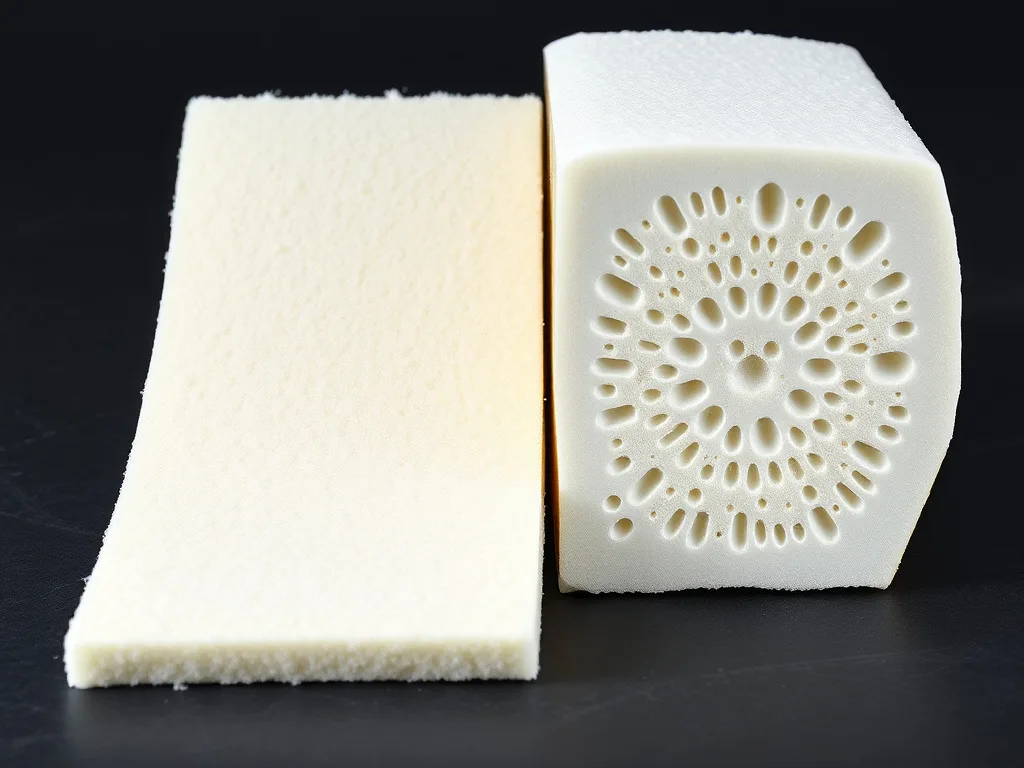
Open-cell is half-pound-density foam that expands about 100x, cures soft and spongy, and delivers roughly R-3.5–3.8 per inch. It's vapor-permeable — air can't get through it, but water vapor can, slowly. In Phoenix it runs $0.45–$0.90 per board foot (a board foot is one square foot at one inch thick).
Closed-cell is two-pound-density foam that cures rigid, delivers roughly R-6.0–7.0 per inch, acts as a Class II vapor retarder at 2 inches or more, and measurably stiffens whatever it's sprayed onto. It runs $1.00–$1.65 per board foot — call it double the cost of open-cell for a bit under double the R per inch.
Both air-seal completely, and in Phoenix the air seal is most of the magic: it's what stops 115°F outside air (and monsoon humidity) from being pulled through every gap in your ceiling plane.
Why Hot-Dry Changes the Usual Advice
In Houston or Chicago, the vapor barrier question dominates foam debates, because moisture constantly tries to drive through walls and condense somewhere it shouldn't. Phoenix barely has that problem. Our vapor drive is outward-in during summer and minimal in winter, and for maybe ten weeks of monsoon season there's meaningful humidity at all. In Zone 2B, the air barrier matters far more than the vapor barrier — which means open-cell, the cheaper foam, is fully adequate in most residential assemblies where a cold-climate builder would insist on closed-cell.
The one place heat genuinely argues for closed-cell: extreme-temperature surfaces. Phoenix roof decks hit 160°F, and closed-cell holds its full R-6+ per inch even at those temperatures. On a shingle roof deck that's a nice-to-have; on a metal building skin baking in direct sun, it's the whole ballgame.
The Roof-Leak Detection Angle (Open-Cell's Sleeper Feature)
Here's the counterintuitive one. Open-cell's vapor permeability means that if your roof ever leaks, water passes through the foam and shows up as a stain — you find out while it's a small repair. Closed-cell can trap that same leak against the decking, where it quietly rots the wood for years. On a shingle roof deck, "shows you the leak" is a feature worth having, and it's a big part of why open-cell is our default spec on attic insulation roof-deck jobs.
Monsoon flips it for other assemblies: on flat roofs, block walls, and metal buildings that see bulk water or condensation, closed-cell's moisture resistance is exactly what you want.
The Cost Delta, and When the Extra Money Pays
Run the numbers on a typical 1,600 sq ft roof deck at code-target R-values: open-cell at 5.5" costs roughly $2.48–$4.95 per square foot of deck; closed-cell hitting a similar R at ~3" runs $3.00–$4.95. The ranges overlap, but in practice open-cell quotes come in meaningfully lower for equivalent attic performance — and the leftover budget usually does more good spent on air-sealing details or duct sealing than on denser foam.
The closed-cell upcharge pays for itself when you need at least one of: moisture resistance (metal roofs, flat roofs, block walls), structural stiffening (older decking, metal buildings), maximum R in limited depth (2x4 walls, shallow rafters), or R-value retention at extreme surface temperatures. If none of those apply, you're paying double per board foot for properties you won't use.
Hybrid Specs: The Grown-Up Answer
Plenty of Phoenix homes shouldn't pick just one. Common hybrids we spec: closed-cell on the block walls and garage metal door wall, open-cell on the roof deck; or a 1" closed-cell "flash" against a metal shop skin for condensation control with open-cell filling the rest of the cavity for cheap R. The right answer is per-assembly, not per-house.
Bottom Line
- Most Phoenix attics: open-cell at the roof deck. More R per dollar, leak-friendly, and Zone 2B doesn't need the vapor retarder.
- Metal, masonry, flat roofs, moisture, structure: closed-cell earns every penny.
- Anyone who quotes one foam for everything without asking about your assemblies is selling what's in their rig, not what your house needs.
Read the full specs on our open-cell spray foam and closed-cell spray foam pages, or see real project pricing in the 2026 Phoenix cost guide.
Get a Free Quote
The open-vs-closed call is a 10-minute decision once someone's actually looked at your roof deck, walls, and garage — and it's a decision that changes your quote by thousands. We'll inspect, recommend a spec per assembly with the reasoning attached, and price both options if it's genuinely close. Call 844-967-5247 or get your free quote.