Phoenix Metro • Licensed Pros
Open-Cell Spray Foam Insulation in Phoenix
Budget-friendly air sealing and sound control — the workhorse for Phoenix attics and interior walls.
Open-cell spray foam is the workhorse of Phoenix insulation — half-pound-density foam that expands roughly 100 times its liquid volume, filling every gap, seam, and wire penetration in one pass. At $0.45–$0.90 per board foot it delivers the most air-sealing per dollar of anything we install, and in a hot-dry climate like ours, air sealing is where the real cooling savings live. For most Valley attic roof decks and interior walls, this is the foam we quote first.
R-3.5–3.8
Per inch installed
A 5.5-inch roof-deck application lands around R-20 plus a full air seal — which outperforms loose fill at the same nominal number.
$0.45–$0.90
Per board foot
2026 Phoenix metro pricing. Most quotes cluster between $0.50 and $0.75 — roughly half the cost of closed-cell.
100x
Expansion on contact
Open-cell expands about 100 times its liquid volume, flowing into gaps blown-in and batts can never reach.
What Open-Cell Spray Foam Actually Is
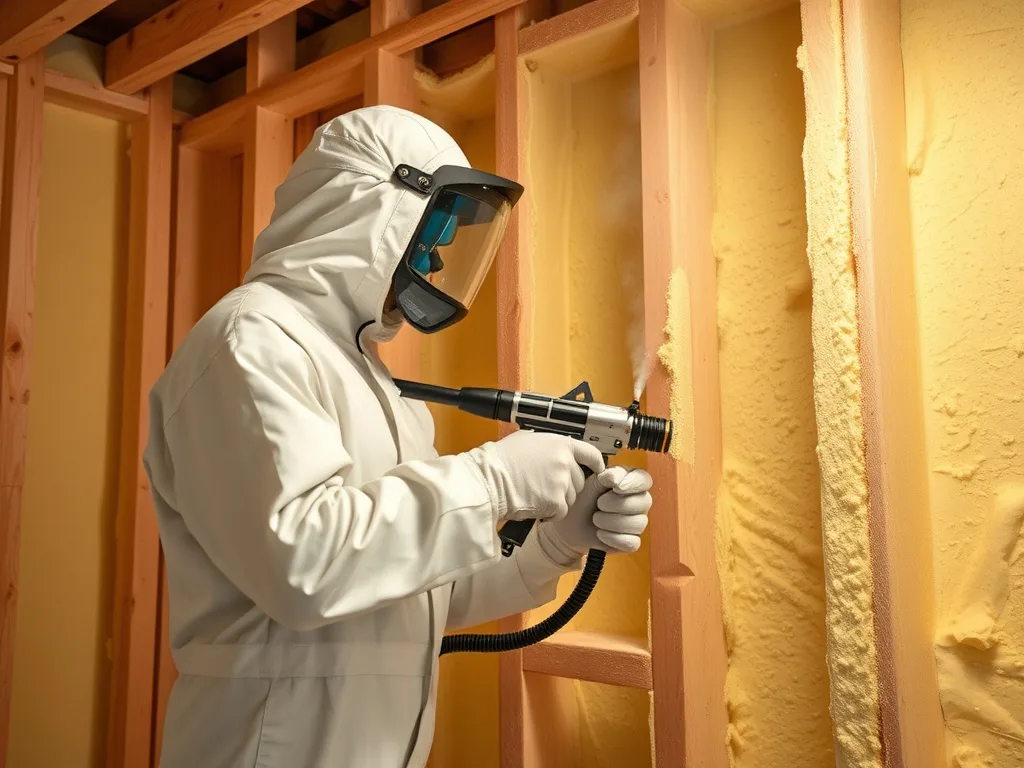
Open-cell foam is a two-part polyurethane sprayed as a liquid that expands into a soft, spongy insulation at about half a pound per cubic foot. The cells that form during expansion stay open and interconnected — that's what makes it lighter, more flexible, and cheaper per inch than its closed-cell cousin. It cures to roughly R-3.5–3.8 per inch, so a typical 5.5-inch roof-deck pass delivers around R-20 of conductive resistance plus something no batt or blown-in product offers: a continuous air barrier bonded directly to the structure.
That air barrier is the point. Fiberglass slows heat that conducts through it, but it does nothing about the hot air that moves around and through it — and in a leaky Phoenix attic, infiltration is a huge share of the cooling load. Open-cell expands into top-plate gaps, wire holes, and framing seams as it's applied, sealing them permanently in the same pass that insulates.
Open-cell is also vapor-permeable, which cold-climate builders treat as a caveat but which works in our favor here. Phoenix sits in IECC Climate Zone 2B — hot and dry — where vapor drive is mild and mostly outward-in during summer. A vapor-open assembly dries readily in our climate, and it comes with a genuinely useful side effect we cover below: it shows you roof leaks instead of hiding them.
Why Open-Cell Fits the Desert
Insulation advice written for Chicago or Houston doesn't transfer to Phoenix. In Zone 2B the design problem is keeping 110°F air and a 140–160°F attic out of your living space, not managing winter moisture. That reorders the priorities: the air barrier matters more than the vapor barrier, and cost-per-R-installed matters more than maximum R per inch, because most Phoenix assemblies have room for a thicker, cheaper foam.
A shingle roof deck is the textbook case. There's ample depth between rafters for 5.5–8 inches of open-cell, the assembly needs to breathe more than it needs a vapor block, and the budget saved versus closed-cell often pays for foaming the gable ends and garage ceiling too. The result is a sealed attic running within 10–15°F of the house — instead of 60°F hotter — with your ducts inside the boundary. That conversion is what drives the 20–40% cooling-bill reductions typical for Valley homes.
- Air seal first — infiltration of 110°F outdoor air is a bigger enemy here than conduction
- Vapor permeability is a non-issue in hot-dry Zone 2B, and it lets the assembly dry
- Lower cost per R means you can afford full depth across the whole roof deck
- Softer foam conforms to Phoenix truss framing and irregular deck lines without gaps
Where Open-Cell Works Best
We spec open-cell for the majority of residential work in the Valley because its strengths line up with where Phoenix homes actually lose their cooling. The exceptions — metal buildings, block walls, flat roofs, anything with real moisture exposure — go to closed-cell, and we'll tell you plainly when your project is one of them.
- Attic roof decks — the classic sealed-attic conversion under IRC R806.5, our most common job
- Interior walls — sound dampening between bedrooms, media rooms, and home offices
- Vaulted and cathedral ceilings — full-depth fill in rafter bays
- Gable ends and knee walls — the leaky surfaces that make bonus rooms unlivable
- Garage ceilings under bedrooms — stops the 130°F garage from baking the room above
What Open-Cell Costs in Phoenix (2026 Numbers)
Open-cell runs $0.45–$0.90 per board foot installed in the Phoenix metro, with most quotes clustering between $0.50 and $0.75. A board foot is one square foot of area at one inch of thickness — so 1,000 square feet sprayed 3 inches deep is 3,000 board feet. Priced at $0.60, that job is about $1,800. Full attic roof decks are usually bid per square foot instead, and the volume brings the effective rate down: figure $1.50–$2.50 per square foot installed, or roughly $2,250–$5,000 for a typical 1,500–2,000 sq ft Phoenix home.
Two honest notes on the math. First, nearly every established contractor in the Valley, us included, carries a $1,500–$2,000 minimum job charge — small jobs don't scale down linearly because rig setup and masking cost the same either way. Second, the federal 25C tax credit ended December 31, 2025, so 2026 installs get no federal credit regardless of what an outdated competitor page claims. The rebates that do exist are local: SRP offers up to $600 on qualifying attic upgrades and APS up to $250, and we handle that paperwork.
| Scenario | Typical range | Notes |
|---|---|---|
| Open-cell, per board foot | $0.45–$0.90 | Most 2026 Phoenix quotes land at $0.50–$0.75 |
| 1,500 sq ft roof deck | $2,250–$3,750 | Most common Valley retrofit, about $1.50–$2.50/sq ft installed |
| 2,000 sq ft roof deck | $3,000–$5,000 | Larger single-story or two-story home |
| 1,000 sq ft interior walls, 3 in. | $1,350–$2,700 | 3,000 board feet — sound and thermal in one |
| Minimum job charge | $1,500–$2,000 | Standard across established Phoenix contractors |
| SRP / APS rebates | up to −$600 / −$250 | Qualifying attic upgrades; we prepare the paperwork |
Open-Cell vs Closed-Cell — When We Recommend Each
The honest answer is that neither foam is better — they're different tools. Open-cell wins on cost per R, sound absorption, and fill depth; closed-cell wins on R per inch, rigidity, and moisture resistance. For a shingle-roof Phoenix home, open-cell at the roof deck is the value play almost every time: the rafter bays have depth to spare, and the money saved covers more of the envelope.
We move you to closed-cell when the assembly demands it — metal shop buildings where condensation control matters, block walls with no cavity depth, flat roofs, and rim or exterior exposures. Plenty of Valley projects end up hybrid: open-cell across the roof deck, closed-cell on the metal RV garage out back. If a salesman quotes you closed-cell everywhere without explaining why, get a second opinion — ideally ours.
One open-cell trait deserves special mention in a town full of tile and shingle roofs: because it's vapor-open, a roof leak passes through and shows up as a ceiling stain you can find and fix. Closed-cell can mask a slow leak against the deck for years. In our book, foam that tattles on your roof is a feature, not a flaw.
The Sound-Dampening Bonus
Open-cell's spongy, interconnected cell structure makes it a legitimate acoustic absorber — the same physics that traps air traps airborne sound. Homeowners near I-17, the Loop 101 and 202 corridors, and Sky Harbor flight paths consistently report noticeably quieter interiors after a sealed-attic conversion, because the foam damps both the roof-borne noise and the air paths it rode in on.
Inside the house, open-cell in interior wall cavities is the go-to spec for media rooms, home offices, and bedroom walls shared with living areas. It won't stop bass or slab-borne vibration — nothing sprayed in a wall will — but for voices, TV, and traffic it makes a difference you can hear the first night. Since the rig is already on site for an attic job, adding a few interior walls is cheap incremental work.
Install Day, Cure Time, and Code Compliance
A typical open-cell attic job runs one to two days. The crew masks and contains the work area, sprays the roof deck and gables to the specified depth, trims any overfill, and handles the code items — in an unvented attic that means closing off soffit and ridge vents per IRC R806.5 and applying an ignition barrier coating over the foam where the code requires it. You'll be out of the house on spray day, with standard re-occupancy at 24 hours once the foam has fully cured.
During application the chemistry is active and our installers work in supplied-air protection; after cure, the foam is inert. Getting there depends entirely on on-ratio spraying by a trained crew at correct temperatures — which is exactly what hardware-store DIY kits can't guarantee, and why bad-foam horror stories almost always trace back to bad installation rather than bad material. We finish every job with a walkthrough so you can see the sealed boundary before we load the trailer.
- Free attic inspection with photos and a written scope — board-foot math shown
- Masking, containment, and spray to spec in 1–2 days
- Vent closure and ignition barrier per IRC R806.5 handled as part of the job
- 24-hour re-occupancy after spray day
- SRP or APS rebate paperwork prepared for submission
Common Questions
Open-Cell Spray Foam FAQs
Straight answers from the crew that does the work. More on our full FAQ page.
Have a different question? Read all 26 FAQs or see our 2026 Phoenix cost guide.
Related Services
You Might Also Need

Closed-Cell Spray Foam
Maximum R-value per inch plus a built-in moisture barrier — ideal for metal buildings and block walls.
Attic Insulation
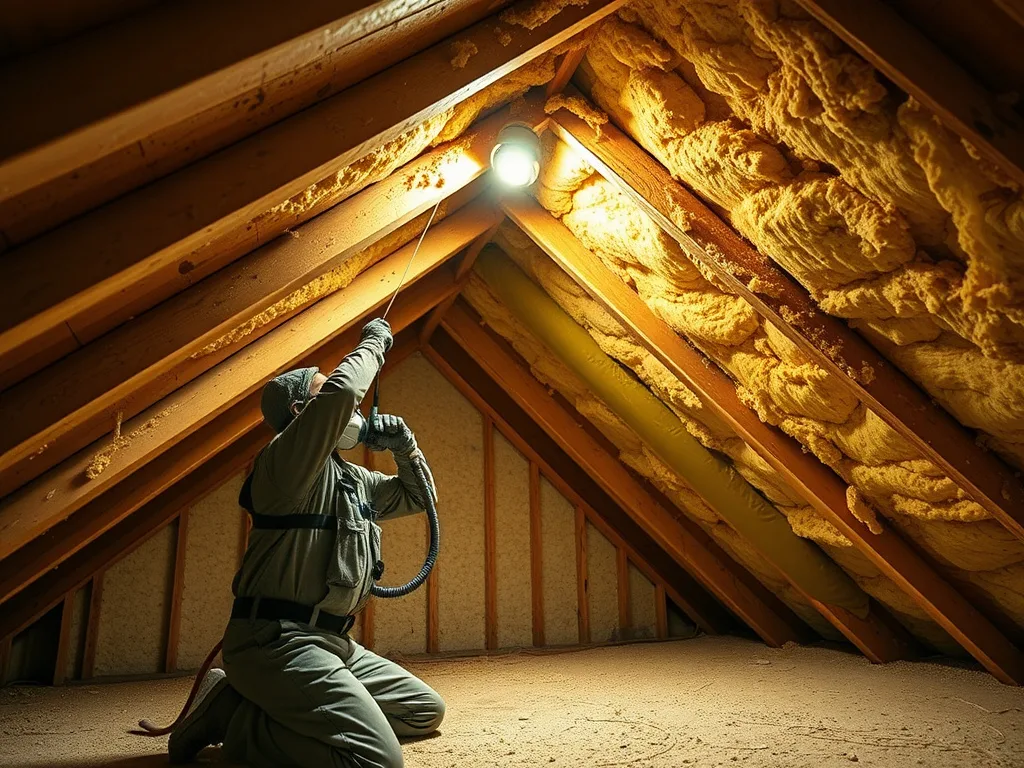
Phoenix attics hit 150°F+. A sealed, foamed attic can run within 10°F of your living space.

Garage & Shop
Stop working in a 120°F garage — foam turns shops into year-round usable space.
Ready to Stop Paying to Cool the Desert?
Get a free, no-pressure spray foam quote for your Phoenix home or building. Most quotes delivered within 24 hours.