Phoenix Metro • Licensed Pros
Insulation Removal & Replacement in Phoenix
Roof rats, dust, and 30-year-old fiberglass — we vacuum it all out and replace it right.
Thirty-year-old fiberglass full of roof-rat droppings is not insulation — it's a contaminated blanket you're paying to keep. Across older Phoenix neighborhoods we pull attic after attic of matted, rodent-tunneled, dust-choked material that stopped doing its job years ago. Professional removal runs $1–$2 per square foot: HEPA-filtered vacuum extraction, bag-out, sanitizing, and entry-point sealing, usually finished in a day. Then the attic gets rebuilt right, most often with spray foam at the roof deck.
$1–$2
Per sq ft removed
Full vacuum extraction, bag-out, and disposal — a 1,500 sq ft Phoenix attic typically runs $1,500–$3,000.
1 day
Typical removal timeline
Most Valley attics are vacuumed, sanitized, and sealed in a single day, with re-insulation the same week.
R-11
What we usually find
The 1970s–90s standard still sitting in thousands of Phoenix attics — a third of today's R-38 code minimum, before contamination.
When Removal Is Actually Necessary
We don't pitch removal on every job — plenty of attics just need more insulation on top of what's there. But there are situations where the old material has to come out, and a contractor who foams over contamination or buries rodent evidence under fresh blow-in is doing you real harm. The honest test is simple: if the material is contaminated, wet-damaged, or in the way of doing the next job correctly, it goes.
The most common trigger in Phoenix, by a wide margin, is rodents. After that come water and smoke damage, renovation work that fills the attic with drywall debris and sawdust, and prep for a roof-deck spray foam conversion — where old floor insulation blocks the inspection and air-sealing that make a sealed attic work.
- Rodent contamination — droppings, urine-soaked material, tunnels, nesting, chewed wiring
- Water damage — roof leaks or AC condensate that matted and compressed the insulation
- Smoke or fire damage — fiberglass holds smoke odor essentially forever
- Pre-foam prep — roof-deck jobs need a clean, inspectable ceiling plane below
- Renovation debris — old insulation mixed with drywall chunks, wire scraps, and dust
- Severely degraded material — 1970s-era batts crushed to a fraction of their rated depth
The Roof-Rat Reality in Phoenix
Roof rats established themselves in the Valley in the early 2000s and never left, with the Arcadia corridor and the older citrus neighborhoods of central Phoenix, Tempe, and Mesa as their stronghold. They enter along roof lines — through gaps at tile edges, roof-to-wall joints, and pipe penetrations as small as a quarter — and once inside, fiberglass attic insulation is their ideal habitat: warm, soft, easy to tunnel, and directly above your ceiling.
What they leave behind is worse than what they chew. An infested attic accumulates droppings and urine throughout the insulation layer, and the smell wicks into the house every time the AC pulls attic air through ceiling leaks. Chewed wiring is the genuinely dangerous part — rodent-damaged wiring is a well-documented fire risk, and we photograph and flag every chewed run we find so your electrician can repair it before the new insulation goes in.
Here's the part most homeowners miss: trapping alone doesn't solve it. If the nesting material stays and the entry points stay open, the next generation moves in within weeks. The durable fix is removal of the contaminated material, sanitizing, sealing the entry routes — and re-insulating with a material rats can't burrow into, which is one more argument for cured spray foam over fresh fiberglass.
Our Removal Process — Containment First
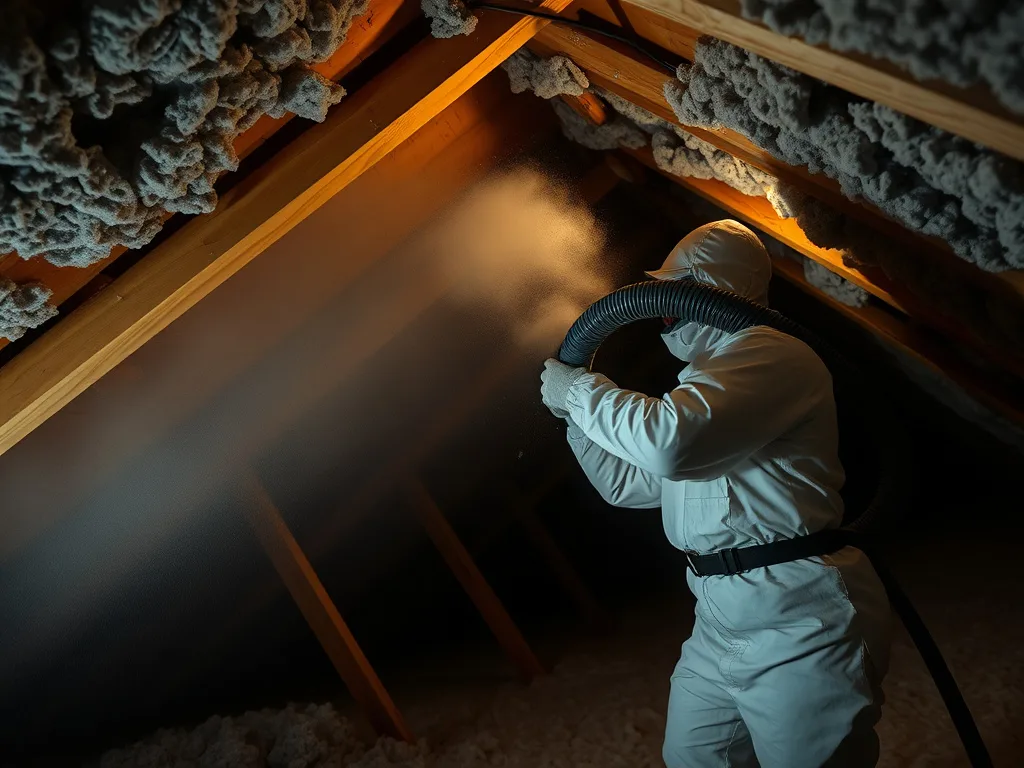
Attic removal done wrong turns your house into a dust event. Done right, it's a sealed industrial process: the material travels from the attic through a vacuum hose into bags outside your house, and the work zone is contained the entire time. Our crew runs a high-powered, HEPA-filtered insulation vacuum staged at the trailer, with the hose routed through the attic access — the contaminated material never touches your hallway floor.
After extraction we go over the attic by hand: bagging out debris the vacuum can't take, sanitizing and deodorizing the entire space with an antimicrobial fog, and sealing the entry points rodents used — roof-line gaps, J-channel openings, pipe boots, and the oversized penetrations behind the water heater flue. You get photos of the cleaned attic and every problem we found, because you can't check our work at 120°F and we don't expect you to take it on faith.
- Contain — seal the access, mask the work path, negative-pressure the zone
- Extract — HEPA-filtered vacuum pulls material directly to exterior bags
- Hand-detail — corners, can lights, and debris the hose can't reach
- Sanitize — antimicrobial fog treats the full attic footprint
- Seal — close every rodent entry point at the roof line and penetrations
- Document — photo record of the cleaned attic, damage found, and work done
Why DIY Removal Is Miserable — and Risky
Every summer somebody in the Valley decides to drag their old insulation out by hand with trash bags, and every summer they regret it by the second bag. The practical case against DIY is brutal: a Phoenix attic runs 140–160°F most of the year, the work is on your knees between joists under nail points, and a typical attic holds forty to sixty contractor bags of material that all has to come down through a two-foot hatch in your hallway ceiling.
The health case is stronger than the comfort case. Disturbing rodent-contaminated insulation without HEPA filtration aerosolizes exactly the material you least want to breathe, and old fiberglass throws respirable glass fragments on top of it. Add the real chance of a foot through the drywall — a common and expensive DIY souvenir — and professional removal at $1–$2 per square foot is one of the easier value calls in home improvement. One more screen worth knowing: homes built before 1990 can contain vermiculite insulation that must be tested for asbestos before anyone disturbs it. We check for it on every inspection, and if we find it, the job stops until a licensed abatement firm clears it.
What Removal Costs in Phoenix (2026 Numbers)
Attic insulation removal in the Phoenix metro runs $1–$2 per square foot, which covers extraction, bag-out, disposal, and basic cleanup. Sanitizing and rodent-proofing on contaminated attics fall toward the top of that range. A typical 1,500 sq ft single-story attic prices at $1,500–$3,000 — and as with all trade work at this scale, a $1,500–$2,000 minimum job charge is standard across established Valley contractors.
Most customers bundle removal with re-insulation, and the combined package is where the pricing gets efficient: one mobilization, one containment setup, one crew. Removal plus a roof-deck spray foam conversion — the full attic reset — typically lands between $3,750 and $7,000 for common Phoenix home sizes, and it converts the worst room in your house into a semi-conditioned space within 10–15°F of your living area. SRP rebates up to $600 and APS up to $250 can apply to the qualifying insulation portion, and we prepare that paperwork. The federal 25C tax credit ended December 31, 2025, so no 2026 install qualifies — worth knowing when a competitor's website still promises one.
| Scenario | Typical range | Notes |
|---|---|---|
| Removal only, per sq ft | $1–$2 | Extraction, bag-out, disposal; contamination prices toward the top |
| 1,500 sq ft attic, removal only | $1,500–$3,000 | Most common Valley single-story footprint |
| 2,000 sq ft attic, removal only | $2,000–$4,000 | Larger single-story or two-story |
| Removal + roof-deck spray foam | $3,750–$7,000 | The full attic reset — remove, sanitize, seal, foam |
| Minimum job charge | $1,500–$2,000 | Standard across established Phoenix contractors |
| SRP / APS rebates | up to −$600 / −$250 | Apply to the qualifying re-insulation portion |
The Full Attic Reset — Removal Plus Spray Foam
Removal is rarely the destination; it's the demolition phase of building an attic that actually works. Once the floor is bare, we can see and seal the ceiling plane — every can light, top plate, and duct boot — and then apply spray foam at the roof deck to convert the attic to a sealed, unvented assembly under IRC R806.5. The attic your ducts live in stops running 140–160°F and starts running within 10–15°F of the house.
Sequencing the two jobs together is materially better than doing them apart. The bare deck lets the foam crew inspect the framing and wiring, the rodent entry points get sealed the same week the nesting material leaves, and cured foam gives rats nothing to burrow back into. Homeowners who complete the full reset typically see the 20–40% cooling-bill reduction that sealed-attic conversions deliver across the Valley — the removal by itself saves you nothing, but it makes everything after it work.
Timeline, Dust Control, and What to Expect
A standard removal is a one-day job: containment and setup in the morning, extraction through midday, hand-detailing and sanitizing in the afternoon, and a walkthrough with photos before the crew leaves. Larger homes and heavy contamination can push to a second day. You can stay home during removal — the work zone is contained and the vacuum discharges outside — though most people choose to be out during the noisiest hours.
When removal pairs with spray foam, the re-insulation typically follows within the same week: removal day, then spray day, then re-occupancy 24 hours after the foam goes in. All extracted material leaves in sealed bags for proper disposal — nothing sits in your driveway overnight — and we do a final walkthrough of floors and the work path before we call it done. If we left dust, we didn't finish.
Common Questions
Insulation Removal FAQs
Straight answers from the crew that does the work. More on our full FAQ page.
Have a different question? Read all 26 FAQs or see our 2026 Phoenix cost guide.
Related Services
You Might Also Need
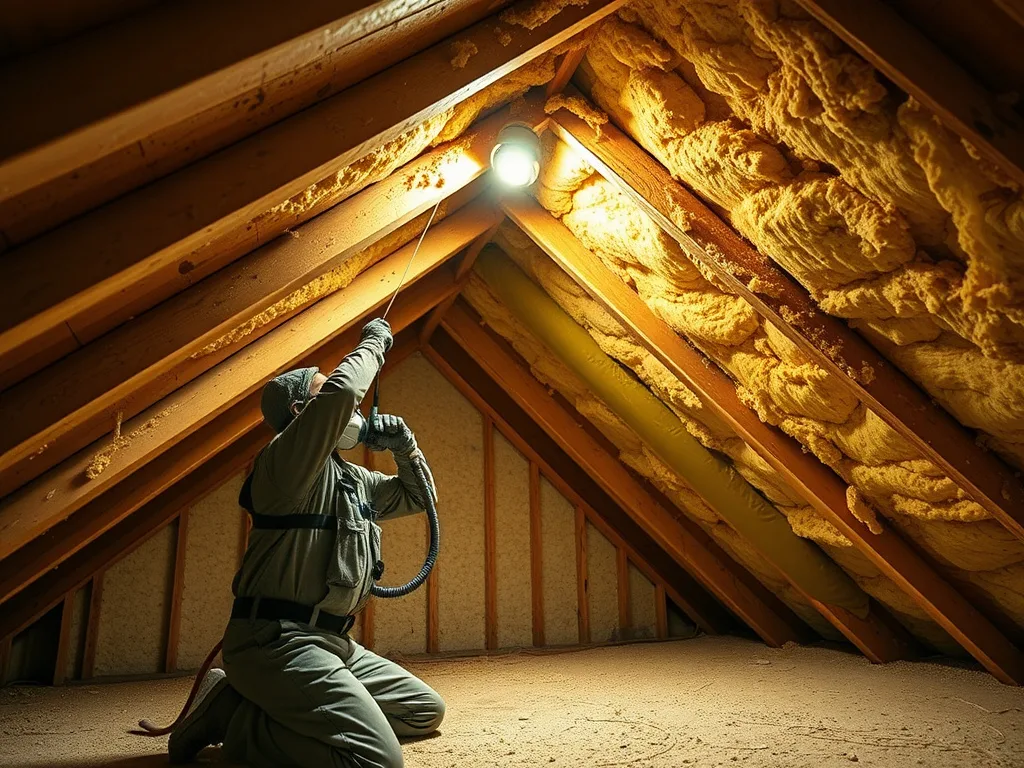
Attic Insulation
Phoenix attics hit 150°F+. A sealed, foamed attic can run within 10°F of your living space.
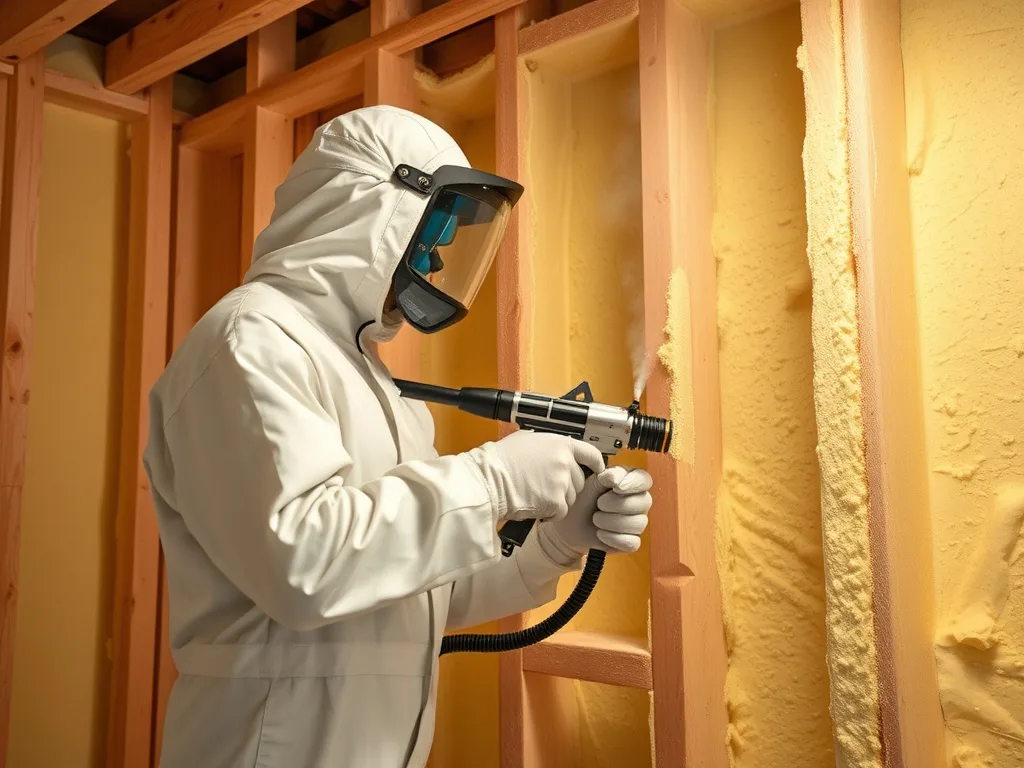
Open-Cell Spray Foam
Budget-friendly air sealing and sound control — the workhorse for Phoenix attics and interior walls.
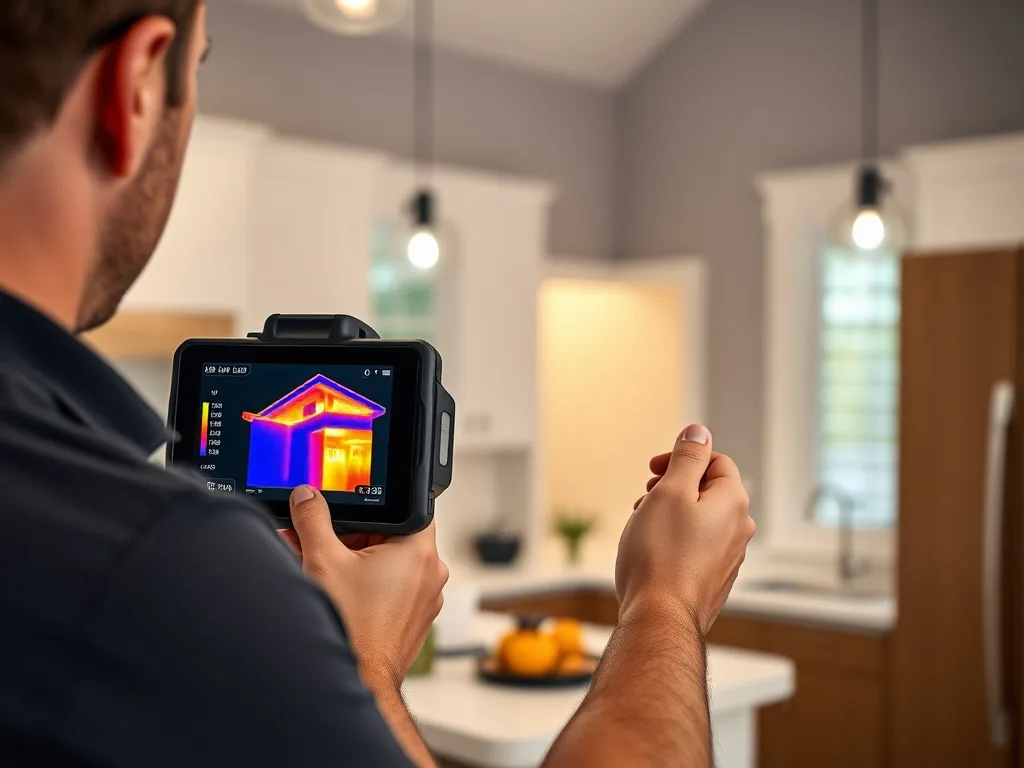
Energy Audits
Thermal imaging finds exactly where your cold air escapes — and what it's costing you.
Ready to Stop Paying to Cool the Desert?
Get a free, no-pressure spray foam quote for your Phoenix home or building. Most quotes delivered within 24 hours.