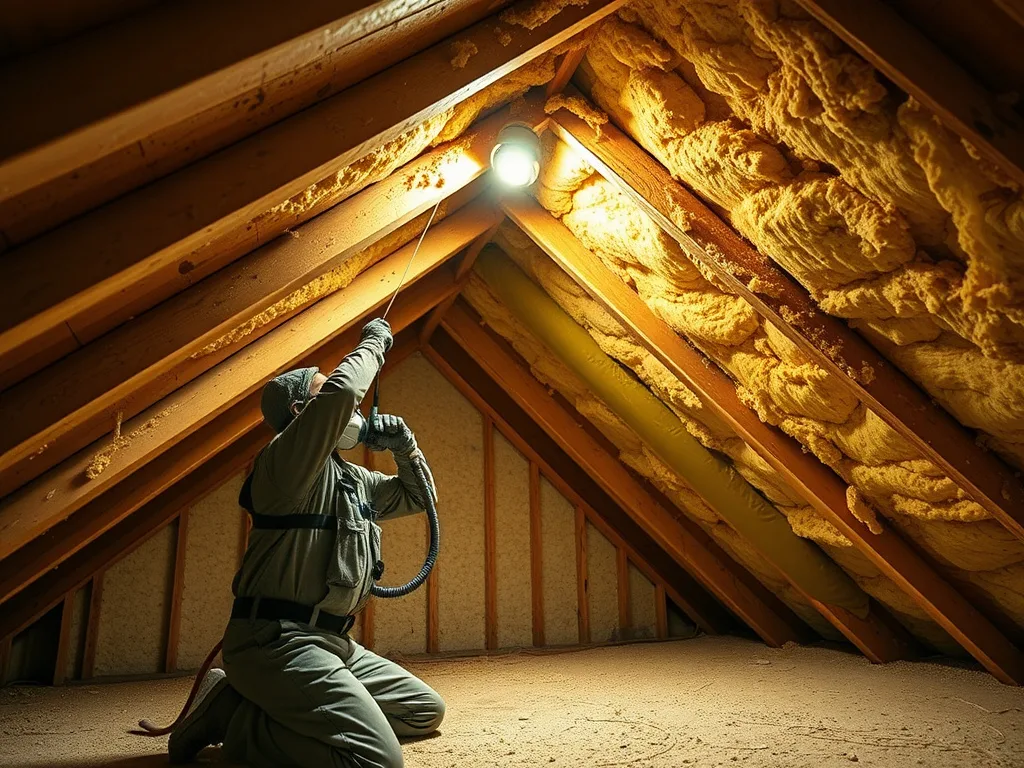
In 2026, Phoenix contractors charge roughly $0.45–$0.90 per board foot for open-cell and $1.00–$1.65 for closed-cell foam. A typical attic roof-deck job on a 1,500–2,000 sq ft home runs about $2,250–$5,000 installed, and most companies carry a $1,500–$2,000 minimum job charge. Exact pricing depends on thickness, access, and prep — which is why quotes start with an attic inspection.
A board foot is one square foot of sprayed area at one inch of thickness, so 1,000 sq ft sprayed 3 inches deep is 3,000 board feet. Foam is priced this way because thickness varies by application — a roof deck might get 5.5 inches of open-cell while a metal shop wall gets 2 inches of closed-cell. It lets you compare quotes apples-to-apples.
Yes — sealed-attic conversions here typically cut cooling costs 20–40%, which works out to roughly $600–$1,200 a year for an average Valley home. The savings come from two things at once: the R-value slows heat gain, and the air seal stops hot outside air from being sucked in. Homes with AC ducts in the attic see the biggest gains.
Most Phoenix attic projects pay back in 3–7 years through utility savings, and faster if your existing insulation is thin (R-11 era) or your ducts run through the attic. After payback, the savings continue for the life of the home. Utility rebates and time-of-use plan optimization shorten the timeline further.
Yes. SRP offers up to $600 off professional attic insulation when a participating BPI-certified contractor brings an attic under R-19 up to R-38+ with air sealing, and APS offers up to $250 through its Home Performance program for very under-insulated homes. Income-qualified households may also stack Arizona HEAR rebates. Note: the federal 25C tax credit expired after December 31, 2025 — insulation installed in 2026 no longer qualifies for a federal credit.
It's one of the few upgrades buyers can feel the moment they walk in during July. Appraisers increasingly credit documented energy improvements, and lower utility bills are a genuine selling point in Phoenix listings — some agents advertise a spray-foamed attic as a feature. Keep your energy-bill before-and-afters; they're your proof at resale.
FAQ
Arizona Climate & Performance
On a 110°F day, an unconditioned Phoenix attic commonly reaches 140–160°F, and dark-shingle roofs can push deck temperatures higher still. Your AC ducts sit in that oven, so cooled air heats up before it ever reaches your rooms. Sealing the attic at the roof deck typically brings attic temps within 10–15 degrees of the house.
Phoenix is in IECC Climate Zone 2B (hot-dry). The 2018 code adopted locally calls for R-38 in the ceiling or attic, and the newer 2021 standard recommends R-49 — we treat R-38 as the floor, not the goal. Walls need R-13 or better. With spray foam at the roof deck, the air-sealing effect means the assembly outperforms loose-fill of the same nominal R-value.
For most Phoenix attic roof decks, open-cell wins on cost per R and its ability to reveal roof leaks rather than hide them. Closed-cell earns its higher price on metal buildings, block walls, flat roofs, and anywhere you want moisture resistance and rigidity — and it holds its full R-6+ per inch even at 160°F deck temperatures. Many homes end up with a hybrid spec.
No — it's actually a reason foam works well here. During monsoon season, humid outdoor air infiltrating through a leaky ceiling adds real load to your AC; an air-sealed foam envelope blocks that moisture path. In a sealed attic, indoor humidity stays controlled by your AC, and in our dry climate the vapor-drive risks that worry cold-climate builders barely apply.
Field studies show shingles over an unvented foam attic run only about 2–5°F warmer — a smaller difference than choosing a darker shingle color. Most major shingle manufacturers now allow unvented assemblies; a few require registration or have specific language, so we check your shingle brand's terms before spraying. In 20+ years of sealed attics in hot climates, shingle failure from foam has not materialized as a real-world problem.
Not in a sealed-attic design — the whole point is converting to an unvented assembly per building code (IRC R806.5), where the roof deck itself is the insulated boundary. Soffit and ridge vents get blocked off as part of the job. Powered attic fans are removed or disabled; running one in a sealed attic would depressurize the space and waste energy.
FAQ
Pests, Safety & Health
Foam seals the gaps, pipe penetrations, and roof-to-wall joints that roof rats and pests use to enter — and unlike fiberglass, cured foam is not a nesting material rats can burrow into and shred. It's not a standalone pest treatment, but combined with entry-point sealing it removes both the highway and the hotel. Rodent-contaminated attics should have old insulation removed before foaming.
During spraying and curing, the chemicals require the home to be vacated — installers wear supplied-air protection. Foam cures rapidly, and the standard re-occupancy window is 24 hours (some closed-cell products specify up to 48–72 for sensitive occupants); after full cure, the foam is inert. Proper on-ratio installation by a trained crew is what guarantees this, which is one of the strongest arguments against DIY.
DIY kits make sense for sealing a rim joist or a small patch, not an attic. Kits cost $300–$800 for a few hundred board feet — several times the per-foot price professionals pay — and bad ratio, wrong temperature, or poor surface prep produces foam that shrinks, smells, or never cures. An attic job also requires code items (ignition barriers, ventilation changes) that kits don't address.
Properly installed spray foam lasts the life of the building — it doesn't sag, settle, or slump the way batts and blown-in do, and it can't be compressed by storage or blown around by wind-washing. Closed-cell foam in particular is routinely warrantied for decades. It's a one-time upgrade; there's no re-topping every 15 years like loose fill.
FAQ
Process & Practicalities
Most residential attic jobs are one to two days: masking and prep, spray, cure, and cleanup. The crew masks floors and contents, and overspray is contained to the work zone; you'll need to be out of the house on spray day and typically overnight. Removal-plus-foam projects add a day on the front end.
Usually yes for roof-deck jobs. Old blown-in on the attic floor blocks inspection, traps rodent contamination, and — once the attic is sealed — sits as an unnecessary layer that keeps the attic warmer than it needs to be. If the existing material is clean, thin, and out of the way, it can occasionally stay; we make that call at inspection, not by default.
A sealed, foamed envelope cuts your cooling load dramatically — it's common for a Manual J calculation after encapsulation to support a smaller AC at replacement time (for example, 5-ton down to 3.5–4-ton). Oversized units short-cycle and dehumidify poorly during monsoon season, so right-sizing improves comfort as well as cost. We coordinate with your HVAC contractor and provide the envelope data.
Yes — unvented spray-foam attics are explicitly recognized in the residential code Phoenix enforces (IRC R806.5 with local amendments), and foam must be separated from living space by a thermal barrier (drywall) or covered with an ignition barrier or intumescent coating in attics and garages. Insulation retrofits in most Valley jurisdictions don't need a permit by themselves, but combustion appliances in the attic and mechanical changes can trigger review. A licensed contractor handles all of it.
Open-cell foam is a genuine sound absorber — homeowners near freeways, flight paths, and busy arterials notice quieter interiors, and it's popular in wall cavities for media rooms and home offices. Closed-cell is denser but transmits more structure-borne sound, so open-cell is the acoustic pick. It reduces airborne noise; it won't eliminate bass or slab vibration.
Framing stage is the cheapest moment foam will ever be: open cavities, no removal, no access constraints, and the HVAC can be designed smaller from day one. But retrofits are the bulk of our work, and a sealed-attic conversion on an existing home is a one-to-two-day job with immediate bill impact. If you're planning a roof replacement or remodel, foam right after is ideal timing.
You can — foam over the ceiling plane air-seals better than blown-in — but in Phoenix it's usually the wrong call if your ducts and air handler are in the attic, because they stay in 150°F air. Roof-deck application brings the ductwork inside the thermal boundary, which is where most of the savings come from. Attic-floor foam makes sense mainly in homes with no attic mechanicals.
Most established Valley contractors, including us, offer financing with approved credit — commonly 6–18 months same-as-cash or fixed-rate terms, so the project can be structured to cost less per month than it saves on summer bills. SRP and APS rebates come off the top, and income-qualified households may access HEAR rebates that cover a substantial share of insulation and air-sealing costs.
That room sits on top of an uninsulated 130°F garage, has short duct runs off a distant air handler, and often has knee-walls open to the attic — a perfect storm. Foaming the garage ceiling, the knee-walls, and the attic above it attacks all three problems. It's one of the most common calls we get from Chandler and Gilbert two-story homeowners.
We run a blower-door test to measure air leakage, scan walls and ceilings with a thermal camera, measure existing insulation depth and effective R-value, and pressure-test the ductwork. You get a written report with a prioritized fix list and the rebate paperwork mapped out. Audit fees are credited toward insulation work if you move forward.
Want the full pricing breakdown? Read the 2026 Phoenix Spray Foam Cost Guide — cost tables, rebate walkthroughs, and the desert climate playbook in one place.
Ready to Stop Paying to Cool the Desert?
Get a free, no-pressure spray foam quote for your Phoenix home or building. Most quotes delivered within 24 hours.